
Recommended Products
Tools, books, and a few personal favorites I actually recommend to the families I coach — organized by what they help with.
Natalie's Top Picks
The 4-5 tools that make the biggest difference — start here if you're only trying one or two things.

Time Timer Home MOD
The visual countdown timer I recommend more than anything else.

Weighted Blanket (10lbs)
Deep pressure input for a nervous system that's had a long day.

Mindsight Timed Phone Lock Box
Locks a phone away for a set commitment — useful when willpower alone isn't winning.

Red Light Therapy Desk Lamp
Warm light for evening homework that won't fight your body's wind-down signals.

Fitbit Inspire 3
Streaks and badges that play well with ADHD reward-sensitivity — the easiest way to build a movement habit.
Organization & Study Systems
A working system beats a good intention every time. These are the low-friction basics I point families toward first.

Post-it Tabs (6-Color Set)
Color-code subjects or assignment types at a glance — a small visual system that makes "find my stuff" effortless.

Dunwell 5-Subject Notebook
One notebook, five sections, hole-punched pages — fewer notebooks to lose track of.

Forvencer 8-Pocket Binder Dividers
Pockets keep loose papers from disappearing into the bottom of a backpack.

U Brands 5-Tab Binder Dividers
Simple, sturdy dividers with view pockets — an easy first system for a student who has none.

Sliding Chore & Morning Routine Chart
A visual, tactile way to see the morning routine instead of relying on memory.
Focus & Time Tools
For task initiation and time blindness — the two EF gaps that show up the most in my sessions.

Neuro Focus Gum (Caffeine + L-Theanine)
A caffeine-free-feeling way to add a little alertness to a study block without a whole energy drink.

Textured Calming Stickers (36-Pack)
Discreet, reusable texture for a fidgety hand during homework or a test.

Textured Pencil Grips (24-Pack)
Bulk enough to keep one in every bag, binder, and backpack pocket.

ONO Roller Fidget
A compact fidget that fits in a pocket — good for the kid who needs their hands busy to think.


3-in-1 Visual Timer & Chore Board
Combines a visual countdown with a task checklist — good for a student who needs to see time, not just be told it.

WAFHX Rotating Timer Cube
Flip it to the number of minutes you need — the lowest-friction way to start a timed work block.

Time Timer Home MOD
The visual countdown timer I recommend more than anything else — shows time passing instead of just counting down.
Mindsight Timed Phone Lock Box
Locks a phone away for a set commitment — useful when willpower alone isn't winning against a screen.
Sleep & Calm
EF capacity isn't fixed — it runs on sleep and regulation. These are the tools I see help most with both.

Aromatherapy Nasal Inhaler Stick Bundle
A portable way to reset between classes or before a stressful task.

Bluetooth Sleep Headphone Eye Mask
Soft speakers built into an eye mask — for a teen who needs sound to fall asleep but hates earbuds.
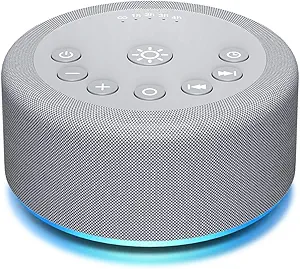
Sound Machine + Night Light
White noise plus a soft light in one — good for a brain that won't quiet down at bedtime.

Sunrise Alarm Clock
Wakes with light instead of a jarring sound — a gentler way to start a day that's often already hard to start.
Red Light Therapy Desk Lamp
Warm light for evening reading and homework that won't fight your body's wind-down signals.

Red Light Therapy Bulb
An easy swap for a bedside lamp to support a better wind-down before sleep.

Bluetooth Sleep Mask (MUSICOZY)
Blocks light and plays calming audio at the same time — one less reason to reach for a phone at bedtime.

Weighted Pressure Eye Mask (nodpod)
Gentle pressure across the eyes — a simple sensory tool for settling down.

Blue-Light Blocking Glasses
For the evening homework session that has to happen after a full day of screens.
Journals & Reflection
For the weekly-reset habit and for a kid who processes better in writing than out loud.

Blank Hardcover Journal
An unstructured notebook for a teen who processes better by writing than by talking.

ADHD Evening Reset Planner
A 30-day undated night-routine journal built around 2/5/10-minute resets — good for a brain that races right before bed.

Clever Fox Journal for Kids & Teens
Guided gratitude and reflection prompts make journaling approachable for a kid who'd stare at a blank page otherwise.
Movement & Recovery
Movement regulates the same nervous system that executive function runs on.


Books
Three for parents who want to understand what's going on. Three written directly to teens, for teens who'd rather read it themselves.
For Parents

Smart but Scattered
Peg Dawson & Richard Guare — the reference I recommend most, organized so you can skip straight to the skill you're worried about.

Your Kid's Gonna Be Okay
Michael Delman — reads like a conversation with a friend, not a textbook. A good pick if "Smart but Scattered" feels like too much right now.

Late, Lost, and Unprepared
Joyce Cooper-Kahn & Laurie Dietzel — practical strategies paired with real case studies, once you understand the "why" and want the "now what."
For Teens

Focus and Thrive
Laurie Chaikind McNulty — written directly to teens in a conversational tone, with real tools and checklists. Not a book about them — a book for them.

Train Your Brain for Success
Randy Kulman — a teenager's guide to executive functions, in language built for a teen reader, not a clinician.

The Executive Functioning Workbook for Teens
Sharon Hansen — a workbook a teen can work through on their own, one specific challenge at a time.
Wearables & Activity Tracking
Data your teen can actually use — heart rate, sleep, and stress patterns that make invisible signals visible.

Food & Focus
Grab-and-go options that support focus and energy — zero-prep, built for a teen feeding themselves.


Nordic Naturals Ultimate Omega
Omega-3 support for focus — part of the dopamine-support food pairing.